Date: May 1, 2025
Time: 4:00 PM – 6:00 PM
Venue: Seminar Hall, Department of Biomedical Engineering, OUCE
Number of Participants: 40
Introduction
“GENESIS: Take the First Step with IEEE EMBS,” held on May 1, 2025, at the Seminar Hall of the
Biomedical Engineering (BME) Department, OUCE, marked a significant milestone in fostering
awareness and enthusiasm for biomedical innovation among students. The event, organized by
the IEEE Student Branch of OUCE in collaboration with the Engineering in Medicine and
Biology Society (EMBS), successfully attracted 40 participants from various engineering
disciplines, highlighting the interdisciplinary nature and growing interest in biomedical
engineering.
The event was designed to introduce students to the real-world applications of biomedical
engineering, emphasizing the integration of engineering principles with medical sciences.
Through interactive sessions, live demonstrations, and an exhibition of medical equipment,
GENESIS provided a comprehensive learning experience, bridging the gap between theoretical
concepts and practical implementations in healthcare technology.
Event Highlights
- Inaugural Session
The event commenced with a welcome address by Ms. Harika, Chairperson of IEEE SB EMBS,
who highlighted the objectives of GENESIS and the importance of biomedical engineering in
modern healthcare. She emphasized how technological advancements are revolutionizing
diagnostics, treatment, and patient care.
Following her speech, Mr. Jaideep, Secretary of IEEE EMBS, delivered an insightful talk on
the role of engineers in medicine. He discussed how biomedical engineering serves as
a convergence point for electronics, mechanics, and medical sciences, enabling innovations
such as wearable health monitors, robotic surgery, and AI-driven diagnostics. His presentation
set the tone for the event, inspiring students to explore this dynamic field. - Biomedical Equipment Exhibition & Project Expo
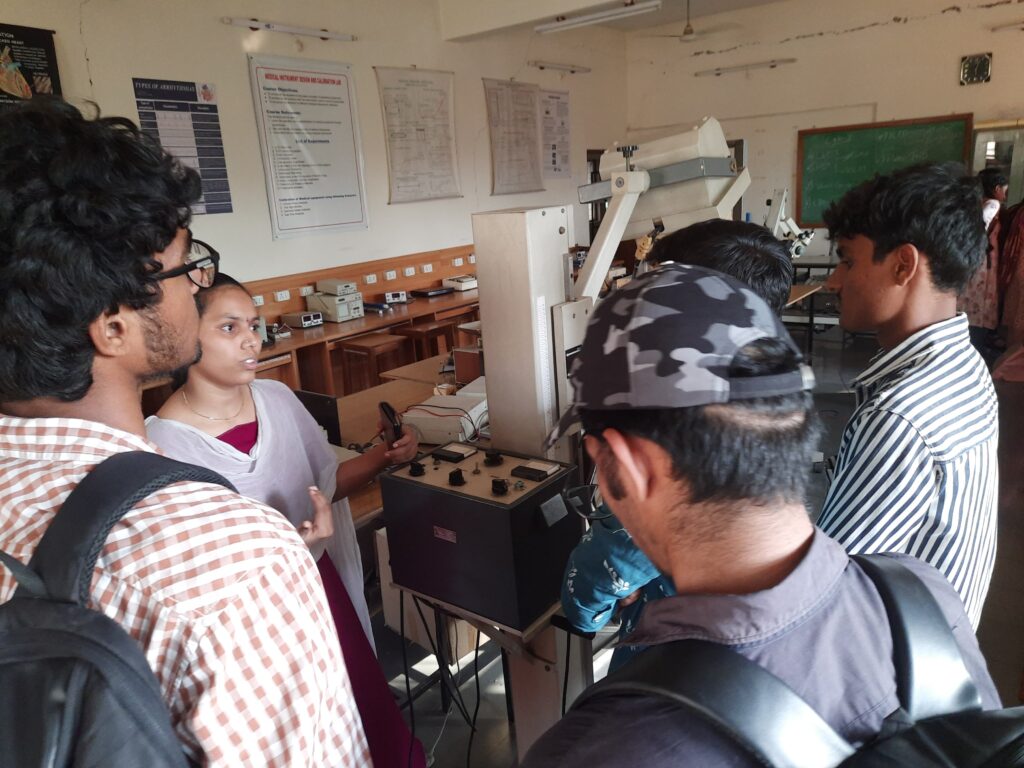
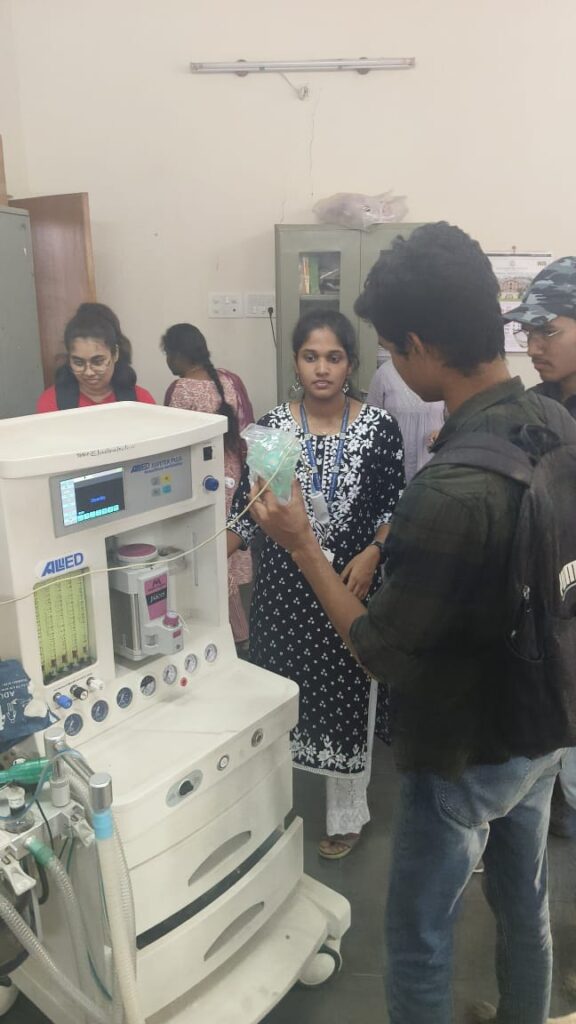
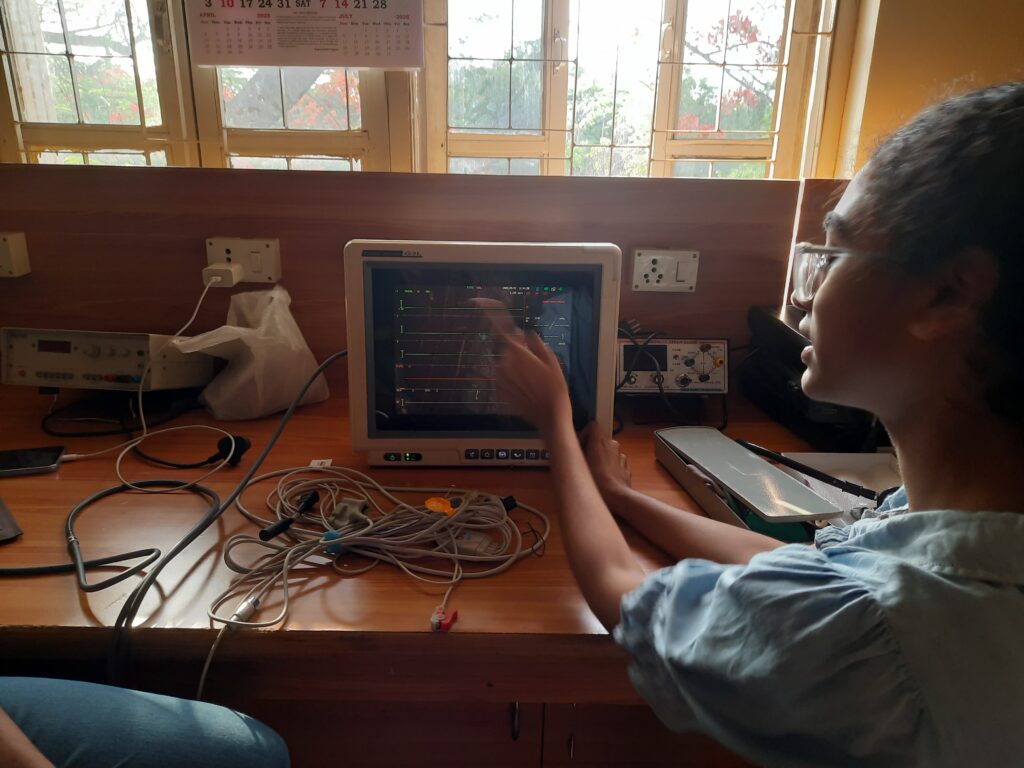
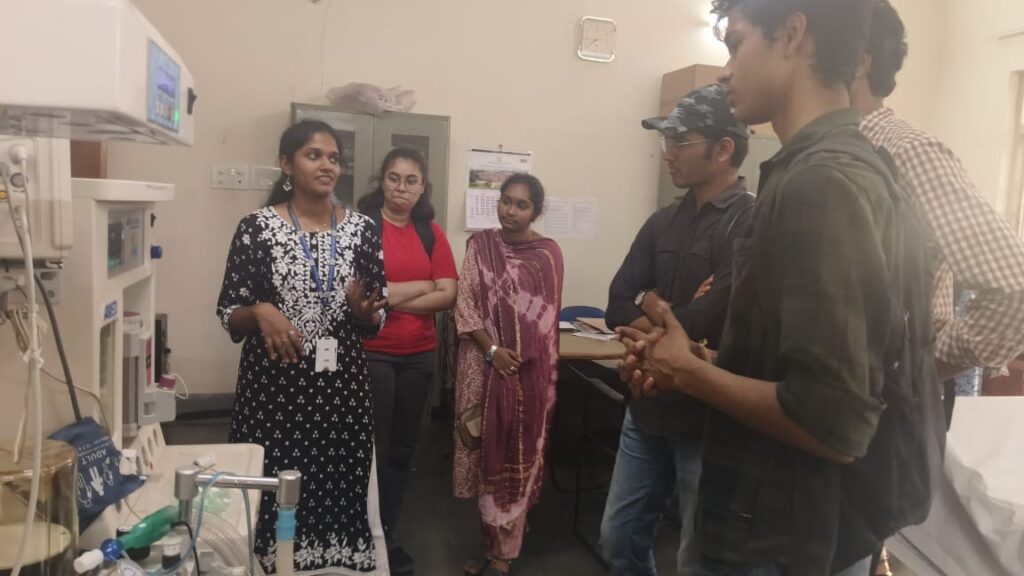
A key highlight of GENESIS was the Biomedical Equipment Exhibition, where students had the
opportunity to interact with real medical devices used in clinical settings. The exhibition
featured:
● Anaesthesia Machine – Demonstrating automated drug delivery systems in surgical
procedures. - ● Ophthalmoscope – Used for retinal examinations, showcasing optical engineering in
- diagnostics.
- ● Phototherapy Unit – Highlighting neonatal care technology for jaundice treatment.
- ● Baby Warmer – Emphasizing temperature regulation for newborns in critical care.
- ● Bedside Monitor – Displaying real-time patient vitals tracking (ECG, SpO₂, BP).
- ● Diathermy Machine – Explaining high-frequency electrical currents in surgical
- coagulation.
- ● X-ray System – Illustrating medical imaging principles and radiation safety.
- Participants actively engaged with the exhibits, asking detailed questions about the design,
- functionality, and clinical applications of each device. The hands-on experience provided
- a deeper understanding of how engineering principles translate into life-saving medical
- technologies.
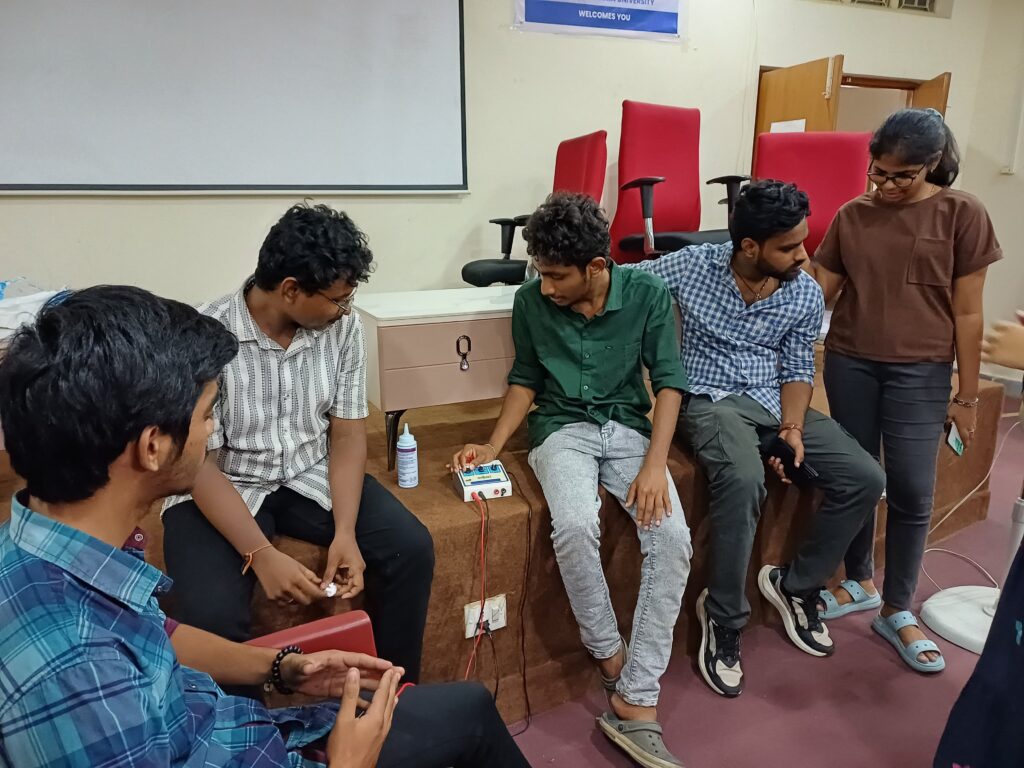
- Live Demonstration: Period Cramp Stimulator (TENS Device)
One of the most engaging segments was the live demonstration of a Transcutaneous Electrical
Nerve Stimulation (TENS) device, designed to simulate and alleviate menstrual cramp pain. The
session covered:
● Working Principle – How electrical impulses block pain signals.
● Design & Development – Selection of electrodes, frequency modulation, and safety
considerations.
● Therapeutic Applications – Beyond menstrual pain, TENS is used in physiotherapy for
chronic pain management.
Students were particularly fascinated by the practical application of bioelectronics in addressing
a common yet often overlooked health issue. The demonstration reinforced the idea
that biomedical engineering can directly improve quality of life. - Interactive Q&A & Networking Session
An open discussion allowed participants to interact with IEEE EMBS members and faculty,
discussing:
● Career pathways in biomedical engineering
● Research opportunities in medical devices & AI in healthcare
● How to get involved in IEEE EMBS projects
The networking session fostered collaborative thinking, with students expressing interest in
future workshops and hackathons on biomedical innovations.
Conclusion & Future Prospects
“GENESIS: Take the First Step with IEEE EMBS” successfully achieved its goal of introducing
students to the expansive field of biomedical engineering. The event not only
provided technical knowledge but also inspired innovation and interdisciplinary collaboration.
Key Takeaways:
✔ Exposure to real-world biomedical devices enhanced practical understanding.
✔ Live demo of TENS technology showcased engineering solutions for healthcare.
✔ Networking opportunities encouraged future participation in IEEE EMBS activities.